The True Cost of a Car Payment

The True Cost of Car Payments: Why It’s Killing Your Wealth

💸 The Shocking Reality of Car Payments in 2025

In 2025, the average new car payment has reached $749 per month, according to Experian’s Q2 2025 report. Used cars aren’t much better at $529 monthly. Even more alarming? Nearly 1 in 5 new car buyers are now paying over $1,000 every single month for their vehicle.

This isn’t transportation. It’s a wealth extraction system.

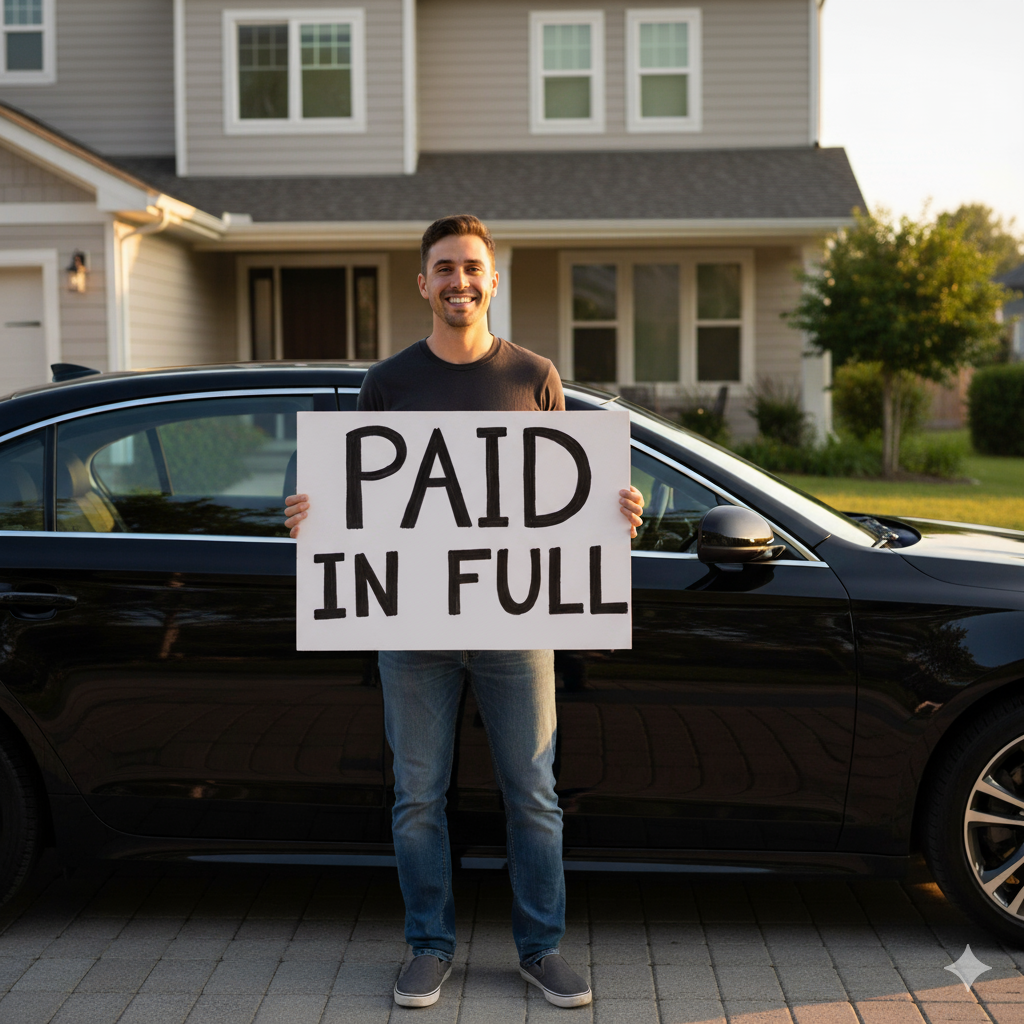
The solution? Simple: Only drive cars you own outright.

🚨 Why Car Payments Are the Enemy of Wealth Building

The automotive industry has successfully convinced Americans that car payments are simply “part of adult life.” They’re not—they’re the single biggest obstacle preventing most families from building real wealth.

Consider these numbers:

  • Median U.S. household income (2025): $75,000
  • Average car payment: $749/month ($8,988/year)
  • Percentage of gross income: 12%
  • Percentage of take-home pay (after taxes): Nearly 20%

One-fifth of your after-tax income vanishing every month—not into an investment, not into equity, but into a depreciating asset you don’t even own.

The bank owns the car. The car payment owns you.

And here’s the devastating part: this cycle never ends until you decide to break it.

💰 The Million Dollar Reason to Drive Paid-Off Cars

Here’s where the math becomes impossible to ignore.

Let’s say you maintain a car payment from age 25 to 65. That’s 40 years. At just $600 monthly, you’ll spend $288,000 on car payments alone over your working life.

Now imagine a different path: What if you only drove paid-off cars instead?

Here’s the realistic breakdown:

  • You’d still need to save for your next vehicle—let’s say $300/month goes to your car fund
  • But the other $300/month? That’s available to invest for your future

That $300 per month invested in an S&P 500 index fund earning 8% annually would grow to approximately $1,000,000 by retirement.

🔧 See your own numbers instantly Change the monthly investment, years, or return and watch the magic happen: Try the Retirement Calculator 

This isn’t about sacrifice. This is about making an intelligent choice between temporary convenience and permanent wealth.

⛓️ Every Payment Is Stolen Compound Interest

The real tragedy of car payments isn’t just the money you spend—it’s the exponential wealth you surrender. Every dollar you send to an auto lender is a dollar that can’t:

  • Compound for decades into real wealth
  • Generate passive dividend income
  • Create financial security for your family
  • Give you options and freedom

Driving a paid-off car isn’t being cheap. It’s being smart.

🔍 The Hidden Costs of Car Payments

Think your $749 payment is the full story? Here’s what financing really costs you:

Interest: Paying Extra for the “Privilege” of Debt

  • New cars: ~6.8% APR average
  • Used cars: ~11.5% APR average
  • On a $42,388 loan (the 2025 average) at 6.8% for 72 months: You’ll pay over $7,500 in interest alone

That’s $7,500 you’ll never see again—pure profit for the lender, pure loss for you.

Higher Insurance Costs You Can’t Escape

Lenders require full coverage, averaging $2,899 annually ($241/month). When you own your car outright, you can choose your coverage level and often save hundreds or thousands per year.

Depreciation: Paying for an Asset Racing Toward Zero

  • Drive off the lot: Lose 10% instantly
  • After 1 year: Down 20%
  • After 5 years: Lost 55% of original value

You’re making payments on something becoming worthless faster than you’re building equity. With a paid-off car? Depreciation still happens, but you’re not paying interest on a depreciating asset—the double-whammy that kills wealth.

The National Addiction to Auto Debt

Total U.S. auto debt hit $1.66 trillion in 2025—a record high according to the Federal Reserve. We’ve normalized living in perpetual debt, convincing ourselves we “need” the new car smell badly enough to trade our financial future for it.

🚀 Why Driving Paid-Off Cars Changes Everything

Owning your vehicle outright isn’t just about avoiding payments—it’s about fundamentally transforming your financial life.

1. You Keep Your Money Working for You

Without a car payment, that $600–$1,000 per month becomes:

  • Next car fund contributions (typically $300–400/month so you can pay cash next time)
  • Investment account deposits ($300–600/month building compound wealth automatically)
  • Emergency fund contributions (protecting you from life’s inevitable surprises)
  • Extra mortgage payments or down payment savings for appreciating assets
  • Business capital to create additional income streams

2. Financial Stress Goes Down

When you own your car outright:

  • Job loss doesn’t mean losing your transportation
  • You can negotiate from strength, not desperation, at work
  • Medical emergencies won’t force impossible choices
  • Market downturns become buying opportunities, not crises
  • You sleep better knowing you truly own what you drive

A paid-off car gives you breathing room. A car payment gives you chronic anxiety.

3. You Break the Lifestyle Inflation Cycle

Here’s the trap financial advisors see constantly: someone gets a raise, immediately finances a nicer car, and ends up financially worse off than before the raise. The hedonic treadmill keeps spinning, and they never get ahead.

Driving paid-off cars breaks this vicious cycle. When you resist financing every few years, you actually get to keep your raises. Your income grows while your transportation costs stay manageable. That’s the secret formula wealthy people understand.

4. Your Debt-to-Income Ratio Stays Healthy

Car payments don’t exist in isolation. They affect everything:

  • Mortgage approval: High car payments can disqualify you or force a smaller home
  • Interest rates: Higher debt-to-income means higher rates on everything
  • Credit access: Maxed-out debt ratios limit your financial options
  • Credit score: Miss one payment and watch your score plummet
  • Financial stress: Debt obligations create pressure that affects decision-making

Without car payments, your financial life becomes dramatically simpler and more secure.

5. You Protect Your Future Self

Every car payment you don’t make is freedom you’re buying. Want to:

  • Retire early or on time with dignity?
  • Change careers without panic?
  • Start a business without drowning in obligations?
  • Travel while you’re still healthy enough to enjoy it?
  • Support aging parents or adult children?
  • Live on one income during major life transitions?

Driving paid-off cars makes all of this possible. Car payments make all of this harder or impossible.

📊 The Uncomfortable Truth About Car Payments

The average American is financing $42,388 for a new car while having less than $1,000 in savings for an emergency.

Read that again.

We’re driving vehicles worth more than our net worth. We’re broke people pretending we can afford brand-new cars.

This isn’t financial progress. This is financial theater—performing wealth while actually destroying it.

The shiny vehicle in your driveway doesn’t make you financially secure. More often, financing it is the exact reason you’re not.

💡 How Wealthy People Actually Think About Cars

Here’s what financially independent people understand that most people don’t:

Wealthy people don’t avoid cars—they simply refuse to borrow money for depreciating assets.

Look at what millionaires actually drive:

  • Paid-off vehicles they bought with cash
  • Used cars 3–5 years old (letting someone else absorb the depreciation)
  • Reliable models known for longevity that they maintain meticulously and drive for 10 years
  • Cars that represent a tiny percentage of their net worth

You’ll rarely see someone building serious wealth trading in a perfectly functional paid-off car because “the new model has a better touchscreen.”

They understand: The goal isn’t to look rich. It’s to be rich.

🧠 The Paid-Off Car Mindset

Before making any vehicle decision, wealthy people ask:

  1. Can I pay cash for this car today? If no, they don’t buy it.
  2. What percentage of my net worth is this vehicle? If it’s more than 10–15%, it’s too expensive.
  3. What could this money become instead? Every dollar in a car is a dollar not building wealth.
  4. Am I buying transportation or ego? Be brutally honest—status is expensive, and nobody cares as much as you think they do.

🗺️ Your Roadmap: Transitioning to Paid-Off Cars

You don’t have to stay trapped in the payment cycle. Here’s how to break free permanently:

Step 1: If You Currently Have a Payment, Get Aggressive About Eliminating It

  • Make extra principal payments every month
  • Use bonuses, tax refunds, and side income to attack the balance
  • Sell the vehicle if you’re underwater and find a cheaper paid-off alternative
  • Cut other expenses temporarily to pay off the car faster

Your goal: Get to $0 owed as fast as humanly possible.

Step 2: Start Your Next Car Fund Immediately

Once the car is paid off (or if you already own it outright):

  • Keep “making the payment”—but split it strategically
  • Put $300–400 monthly into a high-yield savings account labeled “Next Car Fund”
  • Invest the remaining $300–400 monthly into your retirement or brokerage account
  • Let both accounts grow simultaneously

In 5–7 years, you’ll have $18,000–$33,600 cash for your next car. No loan needed. Meanwhile, your investments have been compounding the entire time.

Step 3: Buy Smart: Used, Reliable, and Within Your Saved Amount

When it’s time to buy:

  • Target vehicles 3–7 years old with good reliability ratings
  • Research models known for longevity (consumer reports and reliability databases are your friend)
  • Get a pre-purchase inspection (worth every penny)
  • Pay cash with money from your car fund
  • Buy only what you’ve saved—no exceptions

A $12,000 paid-off car beats a $40,000 financed car every single time.

Step 4: Maintain It, Drive It Long-Term, Keep Building Wealth

  • Follow the maintenance schedule religiously
  • Fix issues promptly (cheaper than replacements)
  • Drive it for 10 years without shame or embarrassment
  • Continue splitting your savings: half to next car fund, half to investments

When this car eventually needs replacing, you’ll have enough saved for the next one. The cycle becomes self-perpetuating, and your investment account keeps compounding.

Step 5: Invest the Difference While Building Your Next Car Fund

Here’s where wealth building accelerates:

  • Split that $600 you’re not paying to a bank: $300 to car fund, $300 to investments
  • Over 10 years at 8%: $55,000+ invested
  • Over 20 years: $176,000+ invested
  • Over 30 years: $446,000+ invested
  • Over 40 years: $1,000,000+ invested

Plus you own every car outright during that entire journey.

This is how regular people retire wealthy. Not by luck—by refusing to finance depreciating assets and investing the difference.

⚠️ “But What If I Need to Finance?” — A Last Resort Guide

Look, I get it. Sometimes life happens. Maybe you’re in a tough spot and need reliable transportation immediately without the full cash amount saved.

If you absolutely must finance, here are the non-negotiable rules:

  1. Keep the payment under 5–6% of your take-home pay (if you make $4,000/month after taxes, max payment is $240)
  2. Finance no more than 50% of the vehicle’s cost—put down a substantial down payment to avoid being underwater
  3. Term length: 36 months maximum—if you can’t pay it off in 3 years, it’s too expensive
  4. Used only, 3–5 years old—let someone else eat the depreciation
  5. Get the lowest interest rate possible—credit unions typically beat banks and dealerships
  6. Have a plan to pay it off early—treat it like an emergency, not normal life

But understand this: Financing should feel uncomfortable and temporary. The moment you accept car payments as “just how it is,” you’ve lost the wealth-building game.

The goal is always to get back to paid-off as fast as possible and stay there permanently.

🔥 The Bottom Line: You Can’t Build Wealth While Financing Lifestyle

Car payments aren’t just monthly expenses—they’re generational wealth killers disguised as normal adulting.

Every dollar you borrow to buy a depreciating asset is:

  • A dollar that can’t compound into retirement security
  • A dollar you’re paying interest on for the “privilege” of debt
  • A dollar someone else is making money from
  • A dollar stolen from your future self

The choice is simple: Drive what you can afford to own outright, or stay broke forever.

It doesn’t matter how nice the car is. It doesn’t matter what your coworkers drive. It doesn’t matter if it has the latest technology.

What matters is this: In 20 years, will you be financially free or still making payments?

💪 Take Action Today

The path to wealth isn’t complicated:

  1. Pay off any current car debt as aggressively as possible
  2. Start your next car fund immediately
  3. Only buy cars with cash you’ve saved
  4. Drive them for 10 years without apology
  5. Invest the money you’re not sending to banks

Your retired self is either thanking you or cursing you. Every car decision you make today is casting that vote.

Stop financing your future away. Start driving paid-off cars and building real wealth.

Choose freedom over features. Choose wealth over appearances. Choose paid-off over payments.

Every single time.


📚 Sources & References

  • Experian Q2 2025: State of the Automotive Finance Market Report
  • U.S. Federal Reserve 2025: Consumer Credit – Auto Loan Balances
  • Bankrate 2025: Average Car Insurance Rates by Vehicle Age
  • Cars.com 2025: Annual Repair & Maintenance Cost Data
  • Edmunds 2025: Vehicle Depreciation Data
  • U.S. Census Bureau 2025: Median Household Income Statistics

</htm